By Josh Fultz, EVP of Mission Services & Innovation
Two conversations. One question that wouldn’t go away.
Over the past two months, I had the chance to spend time at two very different defense events.
SOF Week brought together military leaders, government decision-makers, and industry to talk about where defense is headed. A few weeks later, Tough Stump Rodeo put many of those same ideas into the hands of operators and asked a much simpler question: Can this actually work under real-world conditions?
One conversation focused on the future. The other tested reality.
I expected each event to surface different priorities. Instead, they kept leading back to the same question.
If innovation is moving this fast, why is turning technology into operational advantage still so hard?
Walk the floor at SOF Week and you’ll see remarkable progress across AI, autonomy, counter-UAS, tactical communications, and countless other technologies designed to help operators move faster and make better decisions.
The defense community clearly knows how to build technology.
That’s no longer the hard part.
The Persistent Gap Between Capability and Mission Success
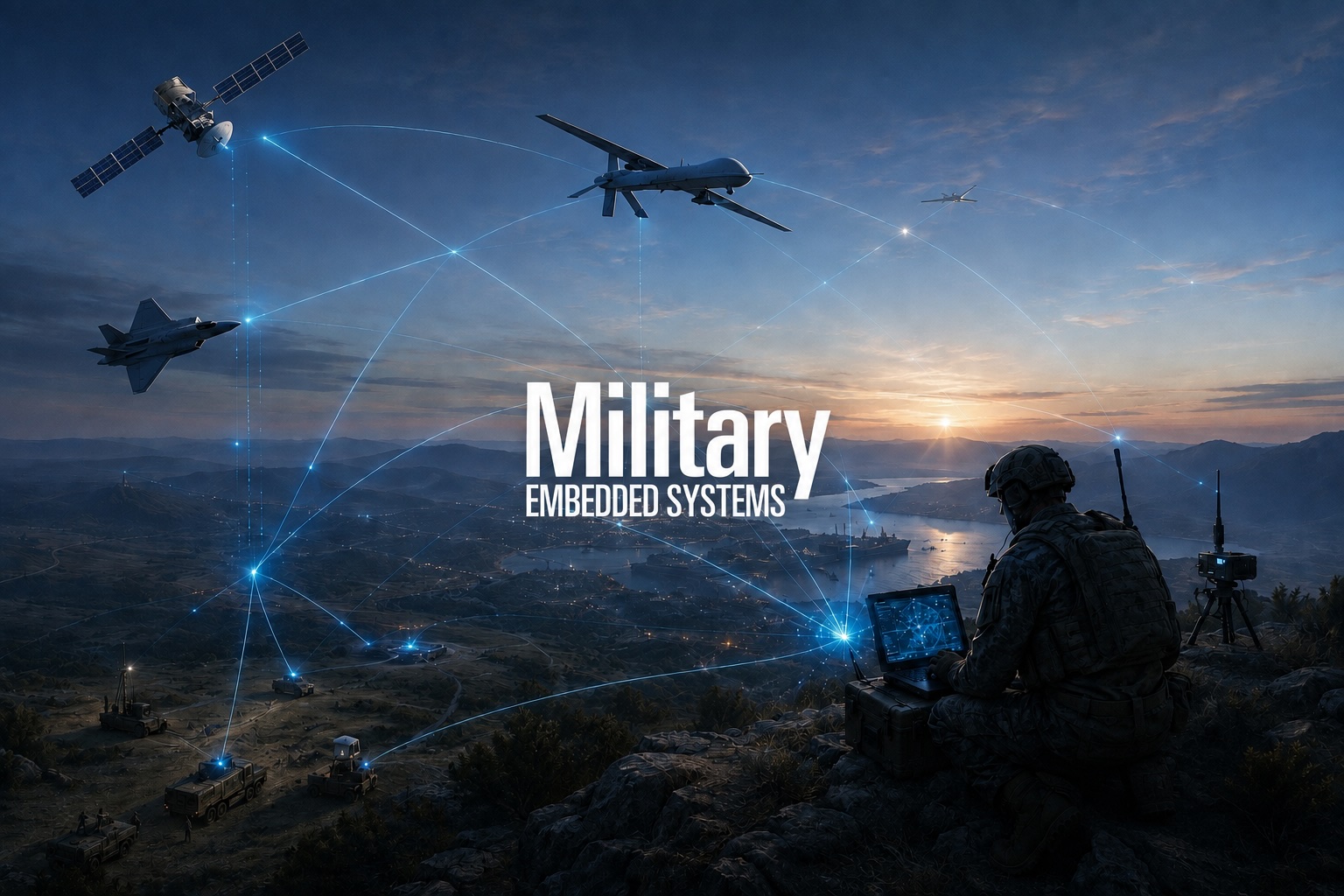
Interoperability and open architectures have been part of the defense conversation for years. The question isn’t whether they matter, that debate is largely settled. Earlier this year, Knowmadics explored the next challenge in an article published by Military Embedded Systems, arguing that the real gap lies between interoperability as a policy objective and interoperability as an operational reality.
That shift is showing up in today’s modernization priorities as well. Lt. Gen. Eric Austin recently emphasized that future air defense and counter-UAS capabilities must be built around interoperability and open architectures, reinforcing that the challenge has moved beyond defining the requirement to delivering it.
If there is agreement that integration matters, why are we still struggling to achieve it?
It’s not for a lack of awareness. We’ve lived through modernization initiatives, acquisition reforms, and multiple technology cycles. If the same integration challenges continue to surface despite years of investment and broad agreement, persistence becomes its own signal. At some point, it’s worth asking whether we’ve been looking for the solution in the wrong place.
We’ve become exceptionally good at building capabilities. We’ve been far less successful at connecting them. That sounds like a subtle distinction until you think about how operations actually unfold.
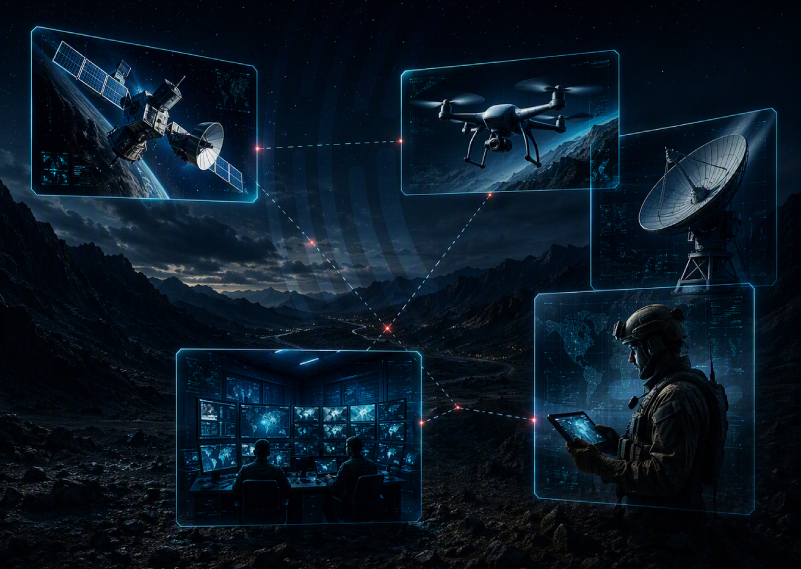
Information rarely stays inside a single system. It moves from a sensor to an analytics platform, into a command-and-control environment, and ultimately to an operator making a decision. Every step in that chain can perform exactly as intended. The mission can still fall short.
Not because one technology failed, but because the connections between them weren’t strong enough to support the outcome.
From Data Collection to Decision Advantage
One observation from Tough Stump kept surfacing throughout conversations with operators: The bottleneck is no longer the sensor.
Ten years ago, that statement would have been difficult to defend. Today, it feels increasingly obvious.
For years, the answer to almost every operational challenge was to improve collection. Build better sensors. Extend coverage. Increase computing power. Gather more data. Looking back, that was the right investment. The defense community solved an extraordinarily difficult technical problem.
Today’s challenge begins after the data has already been collected.
Information creates value only when it moves. It has to reach the right people, connect with other systems, and support decisions before the operational picture changes. As more capability moves to the tactical edge, the challenge isn’t simply moving data. It’s making sure the right context arrives with it.
That’s why conversations about AI, autonomy, tactical communications, and counter-UAS increasingly sound like they’re describing the same problem from different perspectives.
On the surface, those technologies solve very different problems. The more you listen, though, the more they begin to converge. None of them create operational advantage in isolation. Their value grows as they connect to other systems, other data sources, and a broader understanding of what’s happening around them. The technology changes. The dependency doesn’t.
Interoperability is more than a technical discussion. Technology still matters. It always will. But the conversation has to expand beyond APIs and system interfaces. It has to include acquisition, testing, incentives, and how success is measured, because those are the things that determine whether capabilities ever become integrated outcomes.
Many of the structures surrounding defense innovation still focus on individual programs. We fund capabilities individually. We evaluate them individually. We often test them individually.
Operators don’t experience missions that way.
They solve problems that cut across systems, organizations, and domains. They care far less about which platform generated the information than whether the right information reached the right person in time to make a better decision.
There may be no clearer example of the gap between how we develop capabilities and how we expect those capabilities to perform in the field.
The Next Phase of Defense Innovation
The next competitive advantage will not come from the next breakthrough technology. It will come from reducing the distance between technologies that already exist.
That’s a different challenge altogether.
It asks different questions about acquisition, testing, incentives, collaboration, and how government and industry create outcomes together instead of optimizing individual systems.
For years, we measured progress by the capabilities we could develop. The next phase of innovation may be measured by something much simpler: How effectively those capabilities work together once they reach the field.
Where Knowmadics Sees Opportunity
The ideas in this article reflect challenges Knowmadics continues to examine through our work with defense organizations and the broader defense innovation community.
We believe operational advantage increasingly depends on connecting data, systems, and decision-making across the tactical edge. That’s why our software, training, and rapid innovation efforts focus on interoperability, open architectures, and reducing the time between information, understanding, and action.
The technologies shaping tomorrow’s missions already exist. Helping them work together is where we believe the next opportunity lies.
About the Author:
Josh Fultz, Executive Vice President, Knowmadics, and former U.S. Special Operations leader, brings more than two decades of military and technology experience to driving strategic growth and innovation, with expertise spanning secure mobility, ISR, electronic warfare, and advanced mission-enabling systems.